Hay Chopper Machine and Feed Pellet Machine: What Livestock Farmers Must Check Before Buying in China
- ✓Start From Your Herd, Not From the Machine
- ✓Hay Chopper Machine or Chaff Cutter: Same Job, Different Build
- ✓Feed Pellet Machine: Poultry Feed Pellet Machine and Cattle Feed Pellet Machine Are Not the Same Machine
A 200-head cattle farm in East Java asked me to buy a hay chopper and a feed pellet machine. The first quotation was $4,200 for both machines. The second was $6,900. Same capacity on paper, same country, same shipping port. The difference was not the price — it was whether the buyer understood what he actually needed. One machine would chop his forage into a mush his cattle could not digest properly; the other ran a die that would not survive his maize and cassava ration. I have stood in both factories. This guide is what I tell a farmer before he sends a deposit.
The rules are simple and they are the same in Indonesia, Nigeria, Pakistan, Mexico or Brazil: buy the machine that fits your animals and your feed recipe, not the machine with the biggest number on the brochure. A livestock feed processing machine is a chain — chopper, hammer mill, mixer, pellet machine, cooler — and one weak link wastes the money you spent on all the rest. Below are the six things I check before a buyer pays anything, and the numbers I ask the factory to prove.
1. Start From Your Herd, Not From the Machine
Before you look at any hay chopper machine, write down three numbers: how many animals you feed, how many kilos one animal eats per day, and how many hours a day you are willing to run the machine. A 200-head cattle farm eating 8 kg per head per day needs about 1.6 tonnes of feed a day — that is the number that sizes every machine in the line, not the price list. Bring the same three numbers to every supplier. The one who asks about your herd before quoting you is usually the one quoting a real machine.
2. Hay Chopper Machine or Chaff Cutter: Same Job, Different Build
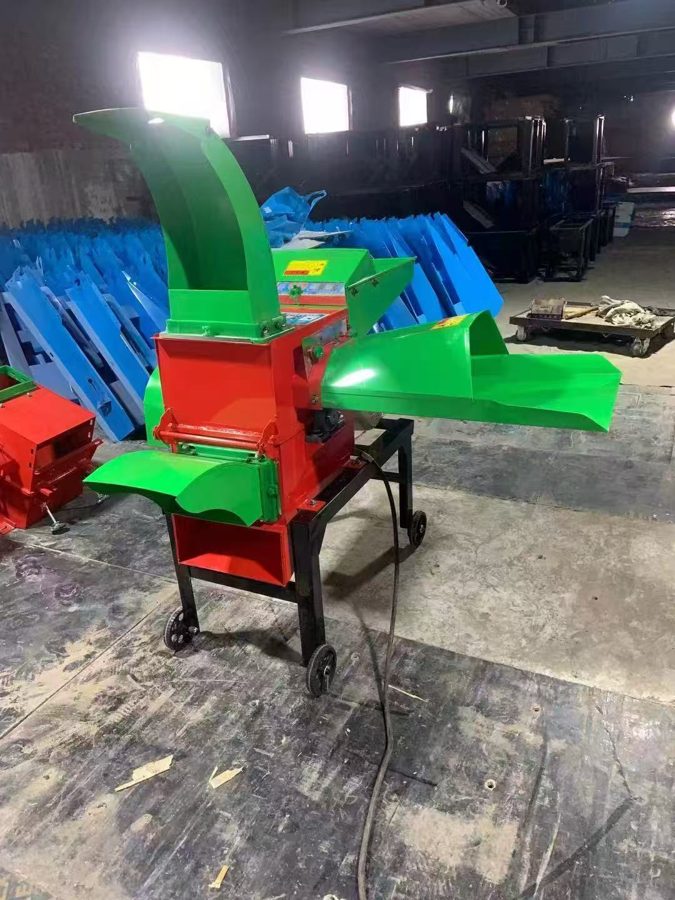
A hay chopper machine and a chaff cutter do the same job — cut forage into short lengths — but they are built for different feeds and different scales. A small chaff cutter with a 3–5 kW motor handles green grass and fresh straw for a few dozen animals; a heavy hay chopper with a 15–30 kW motor and hardened blades is what stands up to dry hay, maize stalks and sugarcane tops on a farm that feeds hundreds. Ask the factory for the blade material, the rotor speed and the cutting length in millimetres. A chopper that leaves 5 cm pieces wastes feed; one that leaves powder gives your cattle rumen problems. Get the cutting length in writing.
3. Feed Pellet Machine: Poultry Feed Pellet Machine and Cattle Feed Pellet Machine Are Not the Same Machine
A poultry feed pellet machine runs a small die — often 2–4 mm — because birds need a crumble or a small pellet; a cattle feed pellet machine works with a larger die of 4–8 mm and far more horsepower to push through high-fibre rations. Feed a cow a 2 mm poultry pellet and you have paid extra for nothing. Tell the factory your recipe before you order: maize, soybean meal, cassava, corn stalk, grass meal — the share of each one changes the die, the ring speed and the motor size. A flat-die pellet machine is cheaper and fine for small farms; a ring-die machine costs more and holds up in daily production. Ask which one suits your volume, and ask for the die and the rollers as spare parts, because those wear out first.
4. Livestock Feed Processing Machine: Buy the Line, Then Check the Line
A feed line is a livestock feed processing machine set: chopper or crusher, hammer mill, mixer, pellet machine, cooler and bagging. The mistake I see most is a buyer spending everything on the pellet machine and buying a mixer too small to feed it, so the pellet machine sits idle waiting for mixed material. Ask the factory to size the conveyors, the mixer volume and the pellet machine together, in tonnes per hour. Then ask what is missing: cyclone, dust collector, steam conditioner, spare screens. If it is not on the list it must be bought separately — and that is often where a hidden $1,000 lives.
5. What the Factory Price Does Not Include
The number on the quotation is ex-work, meaning the machine sitting in the factory yard. It often excludes the motor when a factory sells the machine without power, the spare die and rollers, the freight to your port, the insurance, the customs duty and the inland truck. Ask for an itemised list: machine, motor, spare parts kit, packing, freight, insurance, documents. On a $3,000 pellet machine the add-ons can reach $1,200 before the container leaves China. Make the factory state which parts are included, in writing, and photograph the motor nameplate — the kW on the plate is the real number, not the number in the brochure.
6. Test the Machine on Video Before You Pay the Balance
Words on a quotation cannot prove a machine works. Before paying the balance, ask for a video of the exact machine running on your feed recipe: chopper blades cutting your forage, pellet machine pressing your mix, and the ammeter showing the current under load. Check the pellet output in kilos per hour against what you were promised, look at the pellet hardness, and confirm the serial number on the plate matches the machine you will ship. This is the step where cheap offers fall apart — and where a sourcing agent earns his place, because he can stand in the factory and film it for you.
The Real Price Rule: Compare Cost per Tonne of Feed, Not the Machine Price
A hay chopper that costs $1,500 less but breaks blades every two months is more expensive than the $2,500 machine that runs two years on the same blades. Calculate cost per tonne of feed: the machine price spread over its working life, plus blades, dies and rollers, plus the electricity the motor burns per hour, plus the labour hours to run it. A 22 kW pellet machine and a 15 kW machine can produce the same tonnage, but the weaker one runs longer and costs more in power and time. Ask the factory for the motor kW, the output in tonnes per hour and the die life in tonnes, then divide. That number is the only price that matters. We do not sell machines and we take no commission from factories, so the numbers we give you are the same numbers we see on factory quotations. Two paid services cover our work. Live Visit USD 50: we go to the factory, record video of the exact machine you are buying, and show you the production line as it is. 12-Point Inspection USD 100: we run our full 12-point protocol, with photos, video, measurements and a written list of what the factory must fix before shipment. If you only need one question answered, just ask on WhatsApp +86 181 9216 5833 — that costs nothing. What we do not do: promise the lowest price, guarantee your project profit, or run down another factory so you buy from a particular one.