Feed Pellet Machine Price from China: What Really Decides the Cost
- ✓Flat Die or Ring Die - This Is the First Price Decision
- ✓Diesel or Electric - Check Your Power Before You Check the Price
- ✓The Die and the Roller Are the Real Cost, Not the Machine
A livestock farmer in Lampung asked two Chinese suppliers for a feed pellet machine of about 500 kg per hour. One quoted $1,800, the other $4,600. Both machines were described as 500 kg per hour and both photos looked similar in a catalogue. When I looked at the details, they were entirely different machines: one was a flat-die mill driven by a small diesel engine, the other a ring-die mill with a bigger motor, a conditioner and a die made of better steel. The farmer did not need the expensive one for every job - but he did need to know which one he was buying before he paid.
Feed pellet machines are one of the easiest places in this business to be fooled by a single number. Capacity in kilograms per hour is measured on one raw material at one moisture level with one die; change any of those and the number changes. Price, meanwhile, is decided by the die type, the drive, the steel and what comes with the machine.
Here is what actually decides the price of a feed pellet machine from China, and the questions that separate a real quotation from a wish.
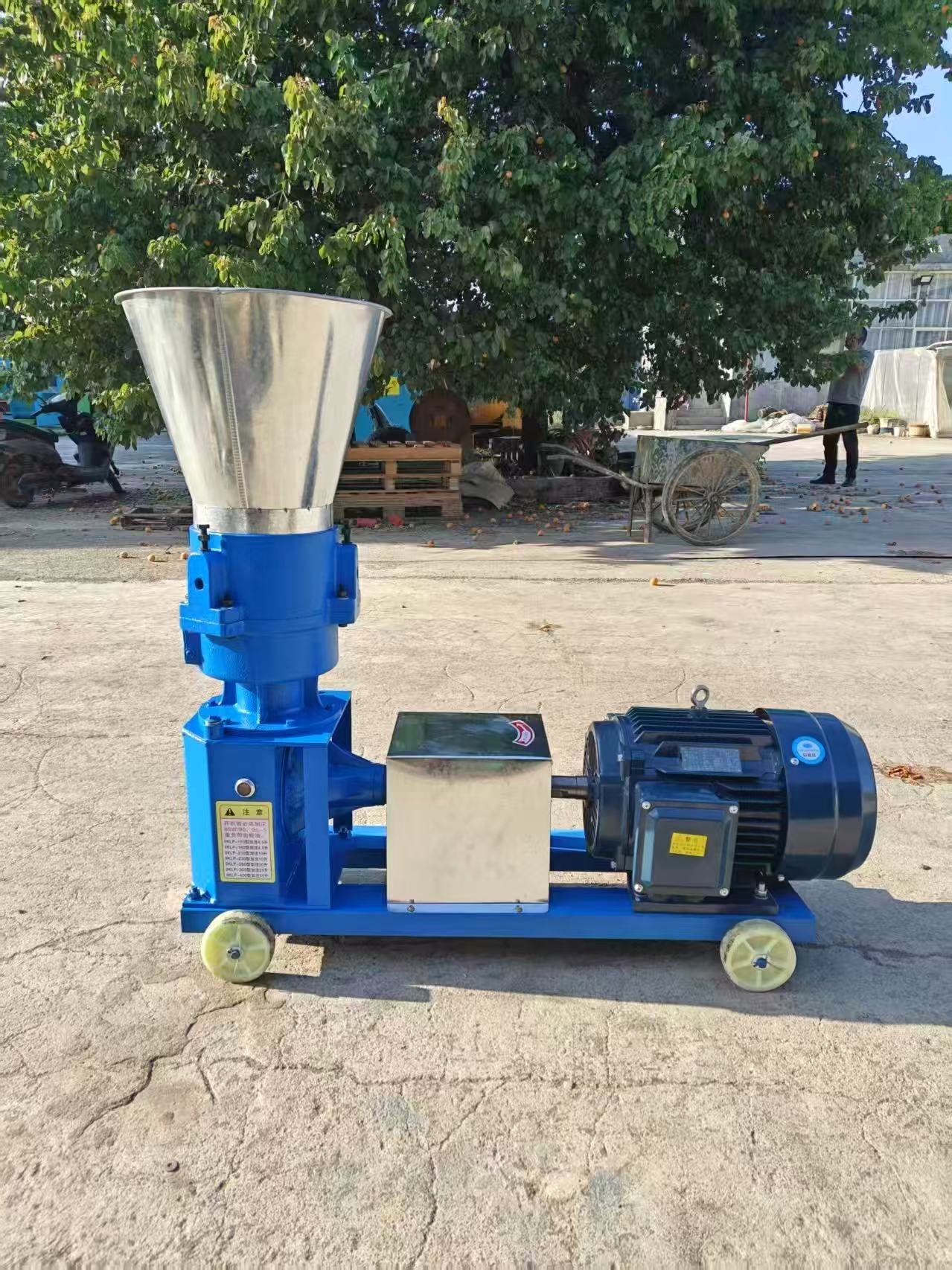
1. Flat Die or Ring Die - This Is the First Price Decision
Flat-die pellet mills are simpler and cheaper, work well for small farms and for poultry or small livestock rations, and are easier to repair. Ring-die mills cost more, run a larger die and produce a denser, more uniform pellet at higher output, which matters if you are feeding cattle, selling pellets, or running many hours a day. A 500 kg per hour claim on a flat-die machine and on a ring-die machine are not the same claim. Ask which type is in the quotation before you compare the price, because around half of a price difference usually lives right here.
2. Diesel or Electric - Check Your Power Before You Check the Price
Many farms in Indonesia do not have three-phase power, and an electric pellet mill that needs 22 kW or more will not start on a single-phase line. A diesel-driven machine costs more to buy and more to run per tonne, but it works where the grid does not. Tell the supplier your available power - single phase or three phase, and the voltage - and let the machine be chosen around it. Buying an electric mill you cannot run is the most expensive mistake in this category.
3. The Die and the Roller Are the Real Cost, Not the Machine
The die and rollers are consumables. Ask for the die's material and hardness, the price of a replacement die, and how many tonnes a die will produce on your recipe. A cheap machine with a soft die that needs replacing every three months can cost more over two years than a better machine whose die lasts a year. Ask for the replacement die price in the same quotation as the machine, and treat it as part of the purchase price.
4. Your Raw Material Decides Everything
Maize, cassava, grass hay, soybean meal, fish meal and palm kernel cake all pellet differently. Hard, dry, fibrous material wears a die faster and needs more power; oily material needs a different die and sometimes a binder. Moisture matters too - most pellet mills want material around 12-15% moisture, so if your maize or cassava comes in wetter, you may need a dryer first. Before you choose a machine, write down your recipe with rough percentages and your moisture, and send that to the supplier. A supplier who quotes without asking for your recipe is quoting a guess.
5. The Line Around the Machine Is Half the Cost
A pellet mill alone does not make pellets. The usual small feed line is: crusher or hammer mill, mixer, pellet mill, cooler, and bagging. If you buy only the pellet mill you will still have to crush and mix your material by hand, which limits you to a fraction of the machine's capacity. Buy the line as a set, sized to the same hourly capacity, so that no single machine is waiting on another. Ask each supplier to quote the full line with the same capacity, then compare lines, not machines.
6. What a Quotation Must Contain
Ask for: the model and die type, the drive (electric power in kW or diesel engine model), the tested capacity with the raw material named, the die and roller specification and replacement die price, the dimensions and weight packed for shipping, the spare parts included, the warranty term, and the price at EXW or FOB. Then ask for a short video of the machine running your type of material. A supplier who cannot send a video of the actual machine under power has not yet proven anything.
The Real Price Rule: Compare Cost per Tonne of Pellets, Not the Machine Price
Add the machine price, the freight, the die and roller replacement over the first year, the power or diesel consumed per tonne, and the labour hours per tonne. Divide by the tonnes you will actually produce in a year. A machine that costs $1,000 less but produces half the tonnage per hour, or needs two dies a year, is the more expensive machine. Size the mill to what your animals eat, not to the biggest number on the price list - an oversized machine running two hours a week wastes money, and an undersized one running fourteen hours a day breaks.
Frequently asked questions
How much does a feed pellet machine from China cost?
The price depends mainly on the die type, the drive and the output. Small flat-die electric mills for a few hundred kilograms per hour sit at the low end; ring-die mills with a conditioner, a larger motor and a full line including crusher, mixer, cooler and bagging cost several times more. Within the same type and capacity, expect a real spread between suppliers - and treat a price far below the others in the same grade as a warning rather than a bargain. Send us the capacity and your recipe and we will quote the actual line.
Flat die or ring die - which should I buy?
For a small farm making feed for its own animals, with a modest daily volume and mixed raw materials, a flat-die mill is usually the sensible choice: cheaper, simpler, easier to repair. If you make feed every day, sell pellets, feed cattle, or want a denser and more uniform pellet, a ring-die mill with a conditioner is worth the extra cost. The mistake is buying a ring-die machine for two hours of work a week, or buying a flat-die machine and running it day and night.
Can the machine run on diesel instead of electricity?
Yes. Diesel-driven pellet mills are common for farms without three-phase power or with an unreliable grid. They cost more to buy and more to run per tonne, but they work anywhere. Tell us your available power supply - single phase or three phase, and the voltage - and we will size the machine around it instead of selling you a mill you cannot start.
What raw materials can I pellet?
Maize, cassava, grass and hay, rice bran, soybean meal, fish meal, palm kernel cake and many mixed rations pellet well, but each behaves differently inside the die. Hard and fibrous material wears the die faster and needs more power; oily material may need a different die type or a binder. Moisture should normally be around 12-15%, so wet material needs drying first. Send your recipe with rough percentages and your moisture and you will get a real answer instead of a general one.
Why is one supplier so much cheaper than another?
Usually because it is a different machine, not a cheaper one: flat die instead of ring die, a smaller motor, a thin die, no conditioner, no cooler, or a bare pellet mill instead of a line. Sometimes it is also a lighter frame and thinner steel. Compare the specification line by line - die type, drive, die material, included machines, warranty - and if a supplier will not give you those details in writing, assume that is where the saving is coming from.
How long does delivery to Indonesia take?
A full small feed line packs into one container in most cases, so plan on a few days for production and inland haulage in China, then roughly one to three weeks of sea transit plus a few days of clearance for Jakarta, Surabaya or Medan. If you need the machine running sooner, we can quote a smaller mill by air or air-consolidated, but the freight per kilogram is much higher. We give you the actual vessel or AWB number, and we send photos and a running video before the shipment leaves.